
Motorcycle Jackets, Pants, Riding Suits and Rain Gear: What Each One Does Well and Where It Falls Short

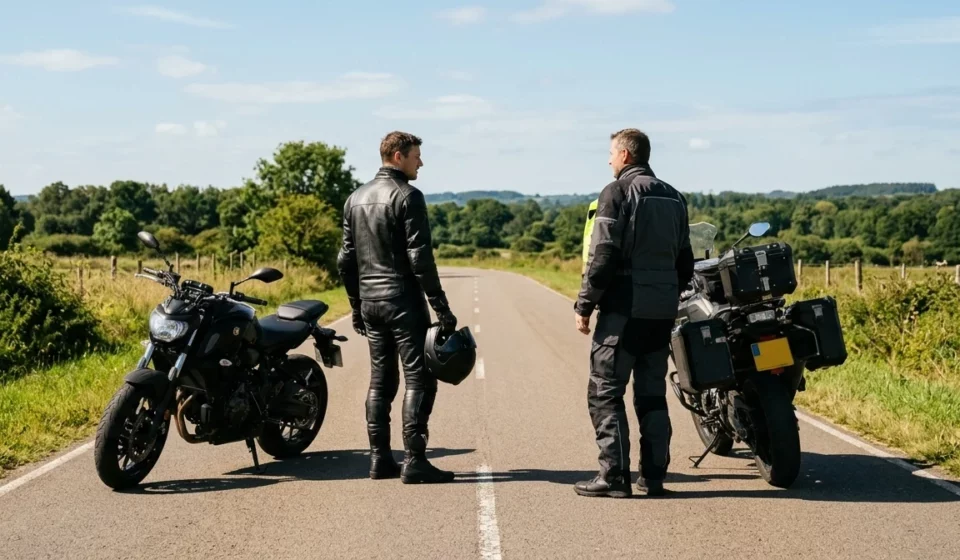
Most riders shopping for protective clothing start with a brand or a price. When I started riding 28 years ago, I was fortunate to receive valuable advice from more experienced riders in our club. With their guidance I learned the more useful starting point is how you ride: how fast, how far, in what weather, and what you do when you get off the bike. A commuter who wears the same jacket into an office has different needs than someone riding a track on Sunday.
This guide compares the four main body-protection categories: jackets, pants, riding suits and rain gear. For each one it covers what the materials do well, where they fall short, and which riders they suit. If you want a broader checklist of what a rider needs, the essential motorcycle gear overview covers that. This article compares the options inside each category.
Why your riding style should pick your gear before the brand does
Every piece of riding clothing balances four things: abrasion resistance, impact protection, comfort in the temperatures you ride in, and weather protection. No single garment maximizes all four. Heavy leather resists abrasion well but gets hot and absorbs water. A light mesh jacket keeps you cool and leaves you exposed to rain and cold.
Riding style decides which of those four matters most:
- Sport and track riding puts abrasion resistance and armor first, because speeds are higher and slides are longer.
- Touring puts weather range first, because you will ride through heat, cold and rain in a single trip.
- Commuting puts convenience first, because gear that is a hassle to put on gets left at home.
- Adventure riding puts versatility and tear resistance first, because the terrain is rough and the weather changes.
- Cruiser riding often favors a classic look and moderate-speed comfort, and many cruiser riders ride in a wide range of temperatures.
Decide which of these describes most of your miles, then use the sections below to match materials to that profile.
Motorcycle riding apparel at a glance
- Leather jacket: strong abrasion resistance, but hot and poor in rain. Best for sport and cruiser riding.
- Textile jacket: widest weather range, with waterproof liners and vents. Protection depends on the brand and the armor. Best for touring and commuting.
- Mesh jacket: coolest in heat, but little weather protection. Overall protection depends on both armor and the garment’s abrasion resistance. Best for hot-climate and summer riding.
- Riding jeans and pants: offer everyday comfort and convenience, with protection varying by materials, construction, CE certification, and included armor. Best for commuters and casual riders.
- One-piece suit: a well-constructed one-piece suit provides continuous coverage, particularly useful for track riding, but harder to put on and less flexible day to day. Best for track and sport riding.
- Rain gear: provides weather protection but generally offers little abrasion or impact protection on its own. Best worn over protective motorcycle clothing for touring and commuting.
Motorcycle jackets: leather, textile and mesh compared
Leather jackets
Leather is the traditional choice for good reason. A thick, well-stitched leather jacket resists abrasion well, and it holds its shape when you slide. It also ages well, and many riders like how it looks on a cruiser or a standard bike.
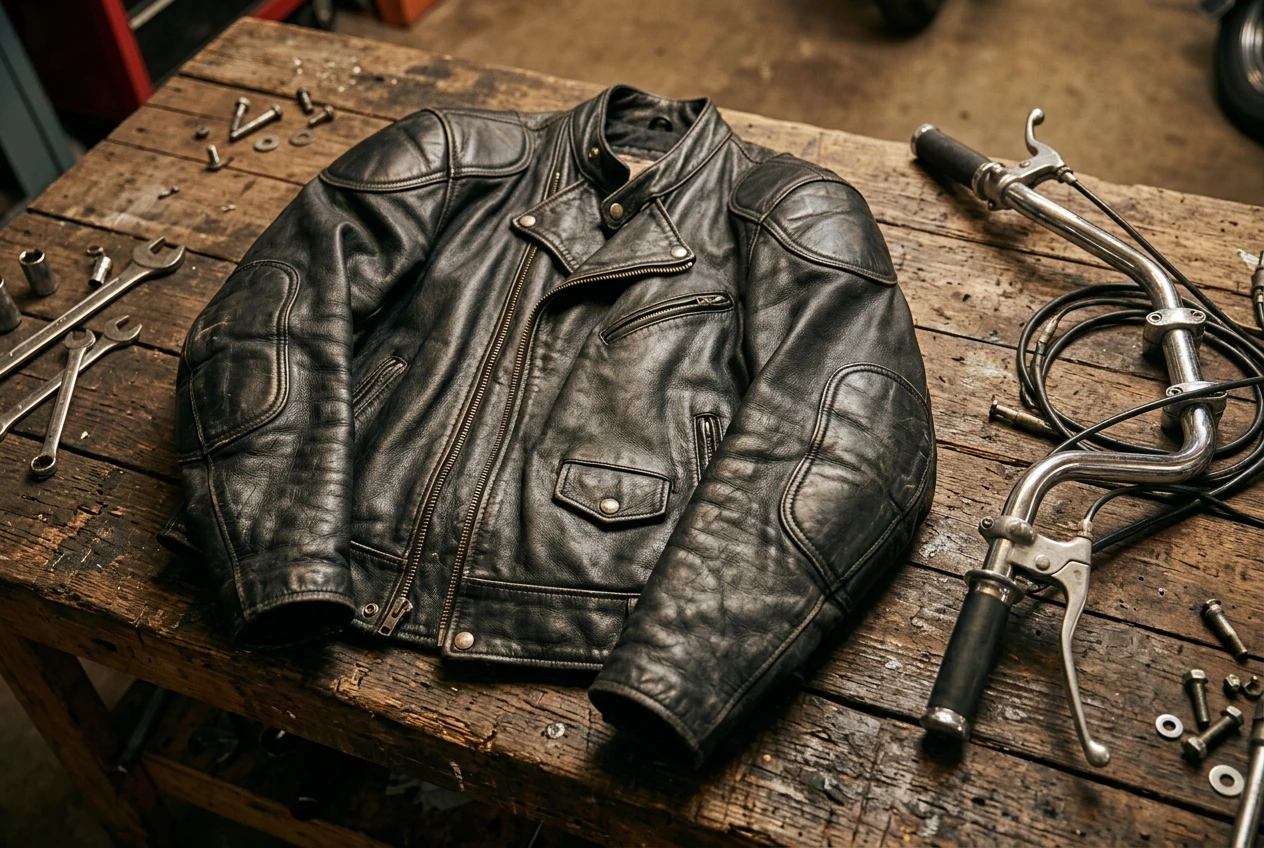
The drawbacks are practical. Leather is heavy, runs hot in summer, and is not waterproof. Wet leather gets heavy and slow to dry, and can stiffen if it dries badly. Fit matters a great deal: a loose jacket can shift on impact and leave armor out of position. Cheap fashion leather jackets that look like riding jackets often use thin hide and have no armor pockets, so check the thickness and construction rather than the styling.
Leather suits riders who mostly ride in dry, moderate weather, sport riders who want serious abrasion protection, and cruiser riders who prefer the look.
Textile jackets
Textile jackets are made from synthetic fabrics woven for toughness, usually with zippered vents and removable liners. Their main strength is range. A textile jacket with a removable waterproof liner and a thermal liner can cover cool, wet and mild days in one garment, which is why touring and adventure riders favor them.
Abrasion resistance varies more in textile than in leather, depending on the fabric weight, the weave, and how well the seams are made. A good textile jacket protects well, and a cheap one may not. Check for reinforced shoulders and elbows, strong stitching, and removable armor in the shoulders, elbows and back.
The weakness of textile jackets is that they can be bulky, and the waterproof versions can feel warm in heat even with vents open. Their zippers, liners and venting also add parts that can fail over time.
Mesh jackets
Mesh jackets are built for hot weather. Open panels let air through, which keeps you cooler at speed and in traffic. Many accept the same armor as textile jackets, so protection in a crash can be good when the mesh is a tough, tightly woven material.
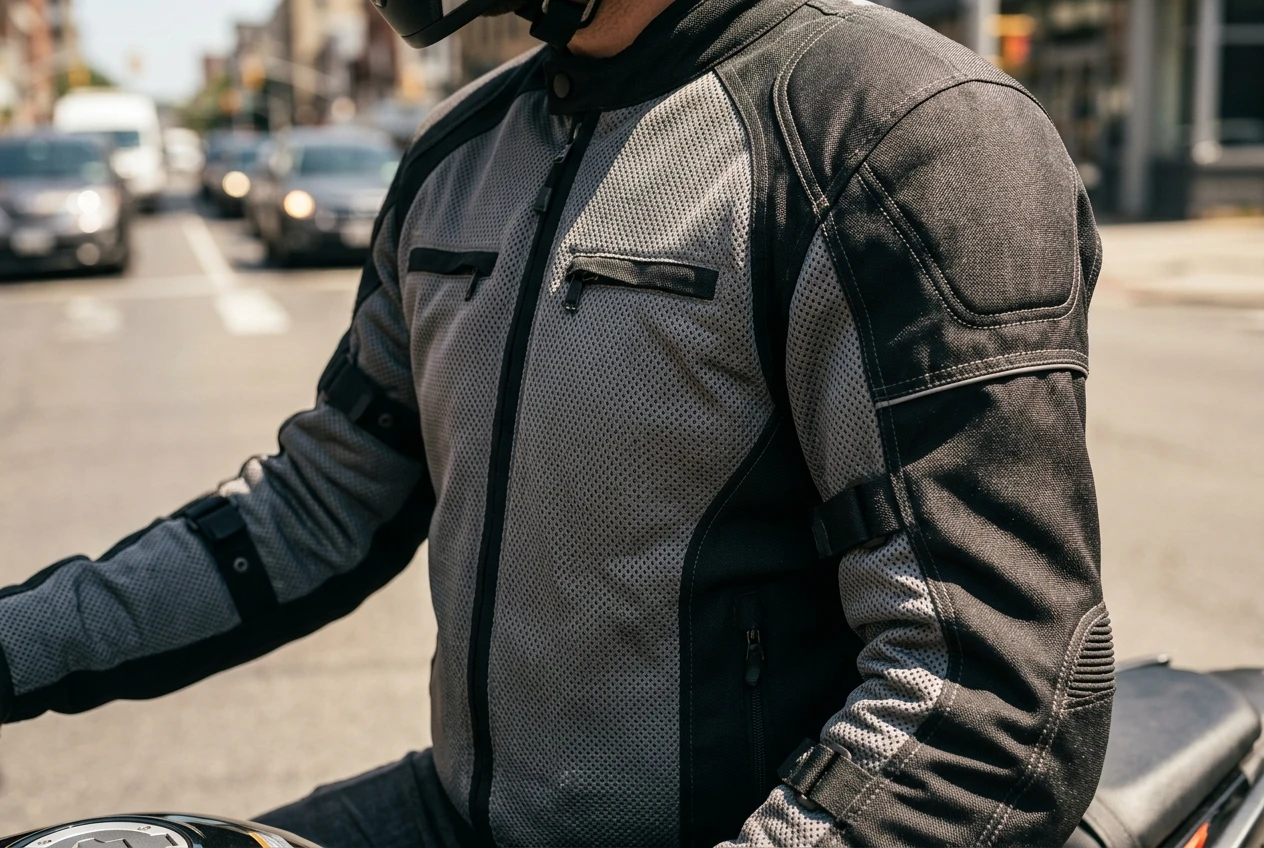
The trade-off is that mesh gives you almost nothing in rain or cold. Some riders pair a mesh jacket with a separate rain shell and a thermal layer, which works but means carrying extra pieces. The open weave can also give less abrasion protection than solid leather or heavy textile, so look at the fabric and the reinforced areas before buying.
Mesh makes sense for riders in hot climates, summer commuters, and anyone who rides in stop-and-go traffic.
Armor matters in every type
Whatever the shell, the armor inside it is what handles impact. Look for armor labeled as CE-certified*. Level 2 armor meets stricter impact-transmission limits than Level 1, meaning less force is transmitted through the protector during standardized testing. A jacket should also have a place for back protection, even if the back pad is sold separately. A jacket that fits well keeps the armor over the shoulders and elbows where it needs to be.
* Understanding CE Certification: EN 17092 evaluates motorcycle garments for abrasion, tear, and seam resistance, with protection classes including AAA, AA, and A. EN 1621 covers impact protectors for areas such as shoulders, elbows, knees, and the back. Level 2 armor provides greater impact attenuation than Level 1. Always check both garment certification and armor ratings when choosing protective riding apparel. Source: SATRA Technology Centre — EN 17092: Protective Clothing for Motorcycle Riders and Motorcycle Protective Equipment Standards.
Motorcycle pants: riding jeans, leather and textile
Riders often buy a good jacket and ride in ordinary jeans. Ordinary denim tears quickly on pavement, and it has no armor in the knees or hips. Pants deserve the same attention as the jacket.
Riding jeans
Riding jeans look like regular jeans but include abrasion-resistant lining, often a tough synthetic fiber such as aramid, in the seat, hips and knees. Most have pockets for knee armor, and some include hip armor as well.
They are the easiest pants to wear off the bike, which is why commuters and casual riders like them. The weaknesses are weather and coverage. Denim is not waterproof, it gets heavy when wet, and it offers less ventilation than mesh pants in summer. Check whether the pair includes armor or only pockets for it, and whether hip armor is part of the package.
Leather pants
Quality leather motorcycle pants can provide excellent abrasion resistance, making them a popular choice for sport and track riders. However, protection also depends on construction, stitching, fit, and certification. They are also warm, which helps in cooler weather and hurts in hot weather. They are less convenient to wear off the bike, and they are not waterproof. They can be hard to put on and take off, and a good fit takes more care than with jeans.
Leather suits sport riders, track-day riders, and cruiser riders who want a classic look and ride in moderate or cool temperatures.
Textile pants
Textile pants parallel textile jackets. They often have removable waterproof and thermal liners, ventilation zips, and adjustment points at the waist and cuffs. Many connect to a matching jacket with a zipper, which keeps the jacket from riding up your back.
They are practical for touring and adventure riding, since one pair handles a range of conditions. The downsides are similar to the jacket: bulk, a warm feel in hot weather, and a wide gap in quality between lightweight, cheaper options and heavier, better-built ones.
One-piece vs two-piece riding suits: protection, convenience and cost trade-offs
One-piece suits
A one-piece suit, whether leather or textile, is a single garment with no gap between the top and bottom. This is its main advantage: nothing can ride up, separate or open at the waist during a slide. For that reason one-piece leather suits are the standard for track riding, and many track-day organizers require leather, so check the rules of the event you plan to attend.
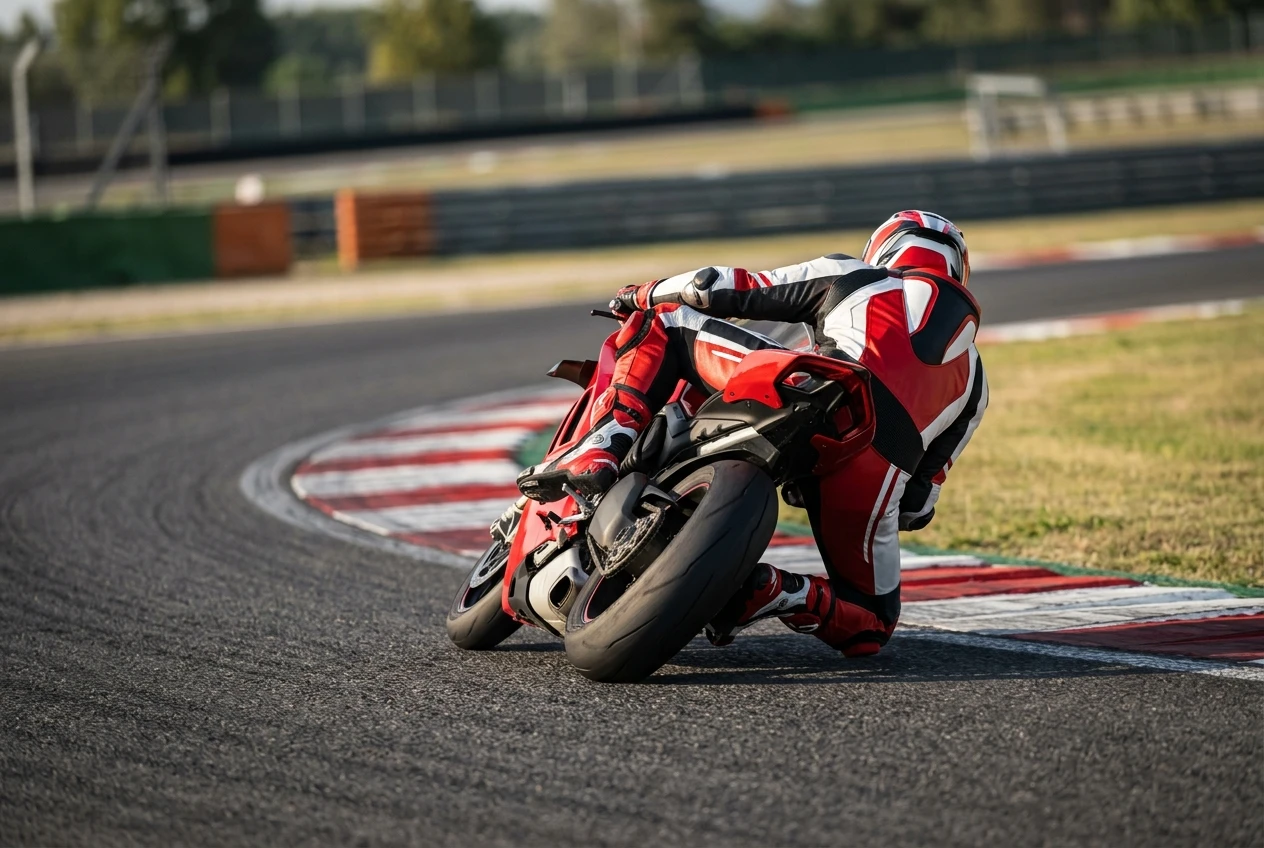
The disadvantages are practical. A one-piece suit is slow to put on and take off, and using the bathroom means removing much of it. It is hot off the bike and awkward to wear for a stop at a café. It also tends to be fitted closely, and a poor fit shows up more than with a loose jacket.
One-piece suits suit sport and track riders who value maximum protection and ride in planned sessions. Some adventure and touring riders also use one-piece textile suits for long days in changing weather, where they want a single weatherproof layer.
Two-piece suits
A two-piece suit is a matching jacket and pants, usually joined by a connecting zipper. You can wear the jacket alone, wear the pants alone, or replace one half without buying the other. The connecting zipper keeps the two halves from separating in most conditions, though the join is not as seamless as a one-piece suit.
The two-piece format is easier to use day to day. It is simpler to put on, easier to carry, and easier to adapt to the weather. It is also easier to fit, since many riders have different top and bottom sizes. A mismatched jacket and pants from two different brands may not zip together, so look for a matched set if you want the connection.
The cost trade-off
A suit costs more than a single jacket, and a high-quality leather suit is a larger purchase than a pair of riding jeans. A two-piece set lets you spread the cost: buy the jacket first, add pants later. A well-constructed one-piece suit provides continuous coverage without a separate waist connection, making it particularly suitable for track riding. However, protection still depends on materials, construction, armor, and fit. Because prices vary widely by brand and material, compare current listings before deciding.
Rain gear: over suits, rain jackets and waterproof liners, and what each really keeps dry
Riding in rain tests gear quickly. Water finds every gap, and wet, cold riders lose concentration. The three main options handle it differently.
Rain over suits
An over suit is a one-piece or two-piece waterproof layer worn over your riding clothes. It is the most complete answer when the weather turns, since it covers your jacket, pants and the gaps between them. Many pack into a small bag and fit under a seat or in a saddlebag.
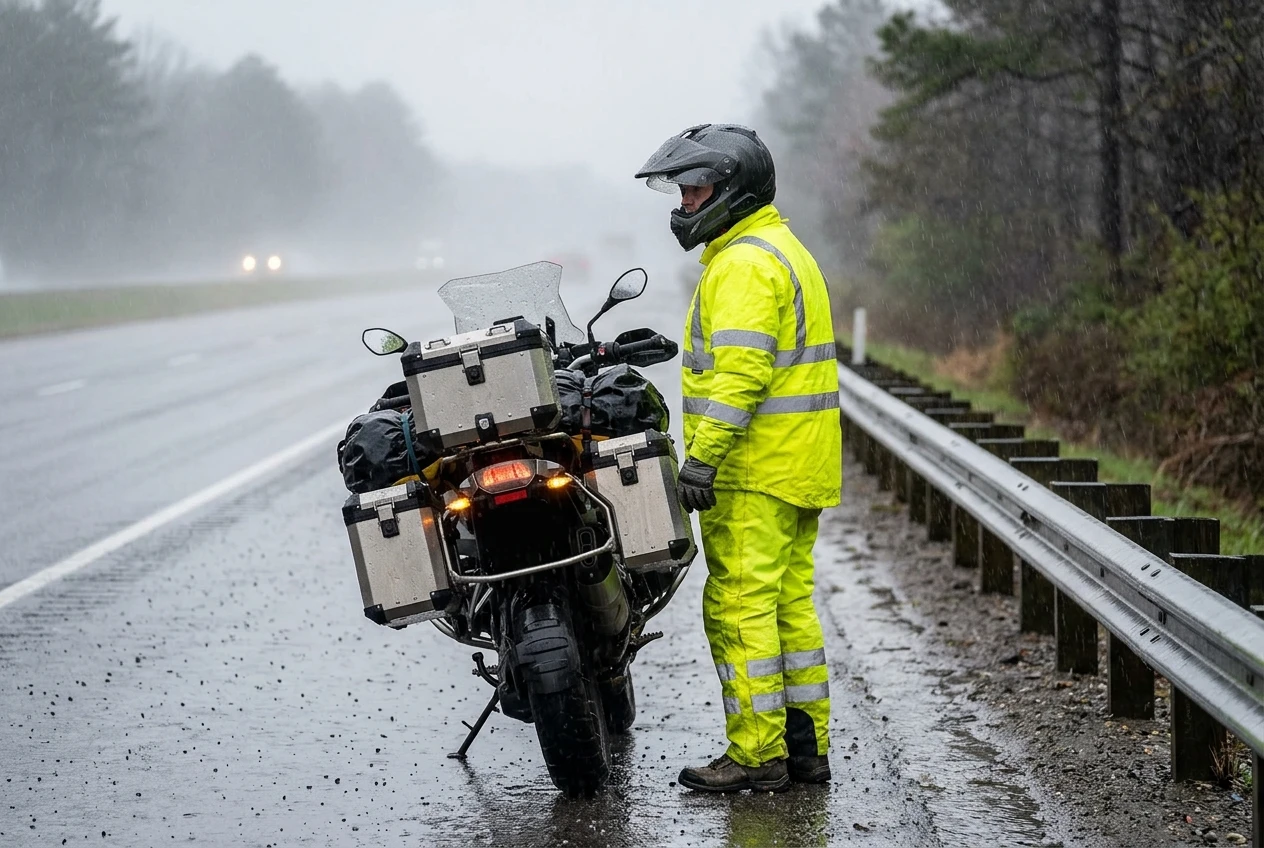
Its weaknesses are fit and durability. A thin over suit can flap at speed, and the flapping can wear through the material. It can also be hard to put on over boots in a hurry. It is meant to keep water out, not to protect in a slide, so do not treat it as armor.
Rain jackets and pants
Separate rain jackets and pants are lighter and easier to put on than a full over suit, and some riders prefer them for that reason. Look for a cut that is long in the back, cuffs that seal over gloves, and a collar that closes against the helmet. Water usually gets in at the neck, wrists, and the waist gap between jacket and pants, so check those first.
A rain shell worn over a mesh jacket is a common summer pairing: mesh for heat, shell for the shower.
Waterproof liners
A waterproof liner is a membrane layer that sits inside a textile jacket or pants. It keeps water out while the outer fabric gets wet. The advantage is that you do not need to stop and put on extra gear, since the protection is already built in.
The limits are worth knowing. The outer shell soaks through and stays heavy, and it may take a long time to dry. Wet outer fabric also reduces breathability, so you can feel clammy. Liners also cannot help gaps at the collar and cuffs, so a good seal there matters as much as the membrane.
Visibility and fit in the rain
Rain reduces how well other drivers see you. Rain gear in a bright or reflective color helps, especially for commuters riding in traffic. Leave room in the fit for the layers you wear underneath, but not so much that the fabric flaps at speed.
Which setup fits which rider: cruiser, tourer, sport, adventure and commuter
- Cruiser: A leather or heavy textile jacket, riding jeans or leather pants, and a compact rain shell stored in a saddlebag. Cruiser riders often want a classic look, and leather delivers it. Add a mesh jacket if you ride in summer heat.
- Tourer: A textile jacket and pants with removable waterproof and thermal liners, and a separate rain layer for sudden downpours. The goal is covering the widest weather range with the fewest garments.
- Sport: A leather jacket and pants, or a one-piece leather suit for track days, with matching armor. Pair it with a lightweight rain layer for the ride home.
- Adventure: A tough textile jacket and pants with ventilation, armor and liners. The gear needs to take scrapes and weather changes without wearing out.
- Commuter: Riding jeans, a textile or mesh jacket depending on the climate, and a packable rain suit. Pick gear you will put on every day, since protective clothing only works when you wear it.
Building your kit in order: what to buy first, what can wait, and where to go next for helmets, gloves and boots
If you’re building your motorcycle riding apparel wardrobe from scratch and spending in stages, here’s a sensible order to consider after covering essential protective equipment such as a helmet, gloves, and boots.
- A jacket with armor. It covers the torso, shoulders, elbows and back, and it is the garment riders use most.
- Pants with armor. Riding jeans are a practical entry point; upgrade to textile or leather pants as your riding needs become clearer.
- Rain gear. A packable over suit or rain shell costs less than a full suit and prevents the worst of a wet ride. When I first began riding in the Northeast, I quickly learned that quality rain gear was nearly as important as a good protective jacket.
- A matching suit or specialized layers. Move to a one-piece or two-piece suit, or add a mesh jacket for summer, once you know how you ride.
Buy for the climate where you ride most, not for the one you hope to ride in. When I moved from the Northeast to the Southwest, I added a mesh jacket to my wardrobe. A jacket that suits your daily miles will get used far more than a specialized garment bought for a trip.
Body protection is only part of the picture. A helmet, gloves and boots complete the kit, and each has its own set of choices. Browse the guides on this site to finish your gear: highest rated motorcycle helmets, types of motorcycle gloves for different riding conditions, and what makes a good motorcycle boot.
