

Motorcycle electronics have become a real game changer for anyone who loves riding. Whether you use your bike for daily commutes or epic cross-country trips, gadgets like Bluetooth headsets, GPS navigators, and dash cams can really upgrade your whole experience. It’s not just about adding convenience; these tools give a boost to safety, connection, and confidence on any ride.
in this article we’ll break down the main choices so you can pick what works best for your riding style. We will cover each category; motorcycle communication gear, motorcycle GPS and navigation, motorcycle dash and action cameras in greater detail separately in later articles.
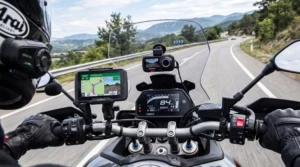
Motorcycle Communication Gear: Staying Connected on the Road
Helmet communication systems have grown well past basic walkie-talkie setups. Now, you can take calls, stream music, get GPS directions, and chat with your riding group—all with gear that’s really easy to use, even with gloves on. Picking the right intercom option depends on how you ride and who you ride with.
There are two main types of motorcycle helmet comms:
- Bluetooth Intercoms: Great for solo riders or rider/passenger pairs. They send audio and calls directly between paired units, usually topping out at a few hundred meters range. For most commuters, this is plenty.
- Mesh Intercoms: If you often ride in groups (three or more), mesh networks keep everyone connected. The network basically repairs itself if someone drops out or falls behind, so you’re not losing touch with the crew.
So, let’s now look at the features on some top models for 2026:
- Cardo Packtalk Edge Mesh: One of the most popular for group rides, with fast mesh connections and surprisingly good JBL speakers. Really useful for those long days when you want reliable audio.
- Sena 50S: Another solid mesh option, with punchy sound, great range, and an easy jog-dial setup you can twist with winter gloves.
- Cardo Freecom 4x: If you don’t need mesh, this Bluetooth model does a fantastic job with crisp audio, voice activation, and really quick charging.
Most of these headsets last all day on a single charge. Many also have noise canceling microphones, which means you can call someone at highway speed and still be understood. It’s one of the tech upgrades that makes any ride feel a bit easier and way more enjoyable.
Motorcycle GPS & Navigation Systems
Paper maps look cool and all, but having live navigation and traffic updates really makes a difference if you want stress free riding. Motorcycle GPS systems come in two main flavors: standalone, weatherproof GPS units and smart displays that mirror your phone.
- Dedicated GPS Units: Devices like Garmin’s Zumo XT2 mount to your handlebars, offering glove friendly screens, waterproof housings, and bright displays that are visible in direct sunlight. Really handy for off-the-grid adventures, since they don’t rely on a mobile data signal. Most models can handle rough conditions, rain, and even dust storms.
- CarPlay/Android Auto Displays: These displays (from brands like Carpuride or CYCPLUS) let you run apps like Google Maps, Waze, or even Spotify by mirroring your smartphone. You can mount the screen to your bars and keep your fragile phone tucked away.
Some units are ultra minimalist, focusing on simple arrows or vibration prompts—just enough info without distractions. Others are designed for adventure, showing topography, twisty routes, and waypoints.
Here are a couple of our recommended top picks:
- Garmin Zumo XT2: Rugged, water resistant, glove friendly, and loaded with features for backroad wanderers, including satellite messaging and weather alerts.
- Beeline Moto II: A super compact device with a simple display. It shows just the basic turn prompts, so it’s really good for those who want to stay focused on the road.
For anyone who rides off the beaten path, having a standalone GPS that works with no phone service is very important. CarPlay displays shine if you do a lot of city riding and want quick access to live maps and traffic updates.
Dash Cameras & Action Cameras for Motorcycles
Capturing your rides on camera is about more than just posting YouTube videos. Dash cams help log accidents or “near misses,” which can help if you ever need insurance evidence. Action cams, on the other hand, keep things fun and creative by letting you record, edit, and share your favorite moments.
- Dual Hardwired Dash Cams: These use two small cameras (front and back) mounted discreetly to your bike. They get power directly from your motorcycle’s battery and start recording as soon as you turn the key. Some even have built-in G-sensors that save the video automatically if you’re in a crash.
- Action Cameras: Like a GoPro, Insta360, or DJI Osmo Action. These mount on helmets, handlebars, or fairings and capture everything around you. Modern 360 degree cams can film in all directions, and you use an app to choose the best angle later on. It’s a blast for sharing twisty road lean angles and next level cool scenery.
Cool features to look for:
- Loop recording, so you always have the most recent ride footage without filling the card
- Built in Wi-Fi/Bluetooth for quick footage downloads and sharing
- Image stabilization, which is important for smooth highway or trail recording
- Night vision modes, which are handy for commuters who ride in early mornings or after dark
For security, dash cams provide peace of mind. For vlogs and memories, action cams give you flexibility to move mounts and experiment with angles. Combo kits even exist so you can use the same camera in both modes if you want.
Choosing & Installing Motorcycle Electronics: Tips and Tricks
Adding gadgets to your ride is pretty straightforward, but there are a few small things that can make installation and real world use a lot smoother.
- Power Supply: Hardwired cameras or permanently mounted GPS units usually connect directly to your bike’s battery or to an auxiliary fuse box. Many come with easy plug and play harnesses. Just be sure to doublecheck voltage requirements.
- Mounting: For handlebar mounts, look for systems with antivibration padding to keep devices steady and visible. Helmet speakers and microphones should be placed firmly, but not blocking ear canals or vents.
- Weatherproofing: Many top products can handle rain, but covering exposed connectors or running cables neatly under panels adds extra durability. This is worth the effort if you ride year round.
- Updates & Compatibility: Always update device firmware before your first long trip. Doublecheck that your headset connects properly to your phone or GPS, and test all systems at home so you’re not sorting out connections in a parking lot.
Taking the time to install things right keeps everything running strong and means you’re not fussing with tangled wires or dead batteries after a few rides.
Roadside Realities: What to Consider Before Buying Electronics
Spending a little bit of time on research can really help avoid buying the wrong gear or something that collects dust in a few months. Here’s what to always keep in mind:
- Battery Life: Some action cams or Bluetooth headsets can drain fast, especially if you use loudspeakers or record in 4K. It’s smart to keep a power bank or bike mounted USB charger nearby for long rides.
- Sound Quality: Helmet noise can drown out weak speakers. Check for noise cancelling mics and try at highway speed if you can.
- Screen Glare: For GPS or mirrored displays, a bright, anti-glare screen is helpful in full sunlight.
- Data & Storage: Cameras should use quality SD cards (usually UHS class 3 or better). For dash cams, bigger storage capacities mean longer footage loops. For action cams, quick wireless transfer saves you quite a bit of hassle.
- Compatibility: Not every device works well with every helmet, phone, or handlebar. Checking before you buy avoids a lot of frustration down the road.
Battery and Power Management
Electronics mean more things to charge. Hardwired devices draw from your bike, making life easier, but portable items need backup batteries or a USB charger. Charging multiple devices on the go can get tricky, so having a system—like labeling charger cords, using a tank bag outlet, and adding extra USB ports—makes things simple.
Weather and Durability
If you travel through rain, mud, big temperature swings, or even high altitudes, doublecheck waterproof ratings (usually IPX6 or better for electronics). A silicone case or plastic cover can be a cheap way to get a little added protection.
Practical Riding Scenarios: How Electronics Fit Everyday Riders
The cool thing about today’s electronics is how well they adjust to different types of riders and trips. Here are a few real world examples:
- Commuters: A Bluetooth headset lets you answer urgent calls or get turn by turn traffic updates without pulling over. A dash cam records the city, just in case.
- Weekend Group Riders: Mesh intercoms keep everyone chatting through winding backroads and scenic stops, while a GPS app or a Beeline pod guides you without fuss.
- Touring and Adventure Riders: Dedicated GPS units and dual dash cams are super helpful for long distance rides, helping you stay on track and log every mile safely.
Frequently Asked Questions
Question: Can I add a communication system to any helmet?
Answer: Most helmets can fit Bluetooth and mesh headsets. Just check the speaker cutouts and mic mounting area to make installation easy.
Question: Will using dash or action cameras drain my bike’s battery?
Answer: Hardwired cams only draw power when the ignition is on. Small power banks keep portable action cams running independently if you’re worried about battery drain.
Question: How do I keep my devices updated and working together?
Answer: Regular firmware updates (from the manufacturer’s app or website) and testing device connections at home or during a short ride help prevent compatibility issues later on.
Final Thoughts
Adding electronics to your ride shouldn’t feel overwhelming. Choosing the right gadgets means thinking about what kind of riding you love, how much you value convenience, and your appetite for tech. Start with the basics, like a solid Bluetooth communicator or waterproof GPS, and work from there. Each upgrade can make your next ride not just more enjoyable, but a whole lot safer too.

I never realized that the simple helmet was not so technologically advanced. From simple gear to protect your head to an outright communications system. That is really clever. They have thought of it all, even the glove friiendlyness.
Hell you can even all listen to the same music if there are many of you going on a ride together. Mesh intercoms is a great way of staying in contact with each other.
I am just curious to know how one would control all of this without becoming a danger on the road. Would it be in front of you on your dash?
That’s a great question, and it’s an important part of using motorcycle communication technology safely. Most modern Bluetooth and mesh intercom systems are designed so you don’t have to constantly look down at a display or take your hands off the controls.
Many systems can be controlled through voice commands, handlebar controls, or simple buttons on the helmet. Some riders also pair them with a smartphone or GPS/navigation system, but the goal is to set everything up before you ride and minimize interaction while you’re moving.
For group rides, mesh intercoms are particularly useful because riders can communicate hands-free without having to reach for a radio or phone. Some systems can also share music, although I’d always recommend keeping the volume at a level that still allows you to remain aware of surrounding traffic.
The technology is impressive, but the safest approach is still to treat it as an aid rather than something that demands your attention. If you need to change settings or deal with something complicated, pull over somewhere safe and do it while stopped.