


Motorcycle riding has always been about freedom, adventure, and enjoying the open road. But that doesn’t mean we have to be completely disconnected from the world around us.
After more than 28 years of riding motorcycles, I’ve seen how much riding equipment has changed. From basic helmet speakers to today’s sophisticated wireless communication systems, technology has introduced some genuinely useful conveniences for motorcyclists.
Whether you’re riding solo, touring with a passenger, or traveling with a group of friends, motorcycle Bluetooth communication systems can make the experience more enjoyable and convenient.
Imagine being able to warn another rider about road debris, communicate with your passenger without shouting, or receive GPS directions without constantly looking at a screen.
That’s where motorcycle communication systems come in.
However, not all systems offer the same capabilities. Some are designed for basic audio functions, while others provide sophisticated group communication through Bluetooth and mesh networking.
Let’s look at the different types, how they work, and what you should consider before choosing one.
How Do Motorcycle Bluetooth Communication Systems Work?
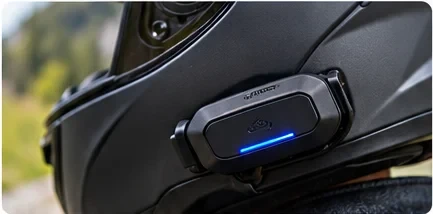
Most motorcycle communication systems consist of a compact electronic control unit mounted on the outside of your helmet, speakers positioned near your ears, and a microphone inside the helmet.
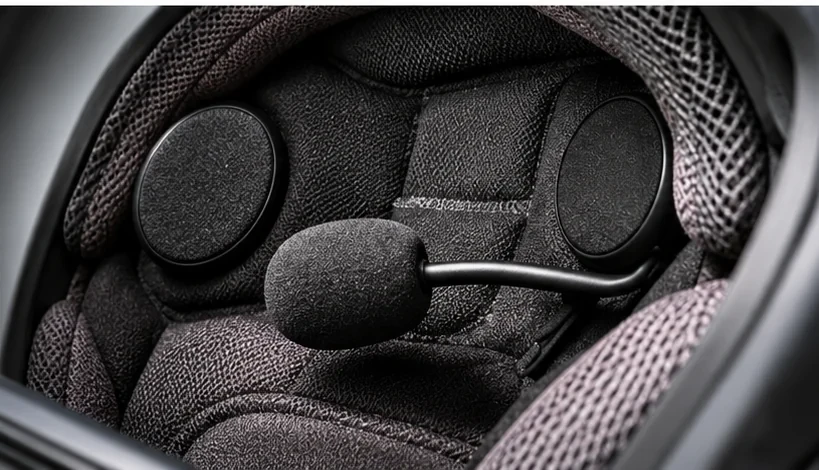
The control unit connects wirelessly to compatible devices, such as your smartphone, motorcycle GPS, or another rider’s communication system.
Depending on the model, you can:
- Listen to music or GPS navigation instructions.
- Make and receive hands-free phone calls.
- Communicate with a passenger.
- Talk with other riders while traveling.
- Use voice commands to operate certain functions.
One important distinction is that Bluetooth connectivity and rider-to-rider intercom communication aren’t necessarily the same thing.
A device might connect to your smartphone through Bluetooth while using a separate wireless technology, such as mesh networking, to communicate with other riders.
Understanding that difference will help you choose a system that meets your needs.
The Different Types of Motorcycle Communication Systems
1. Basic Bluetooth Helmet Audio Systems
Basic Bluetooth helmet systems are designed primarily for riders who want music, navigation instructions, and phone connectivity without spending money on advanced intercom features.
These devices pair with your smartphone or GPS, allowing audio to play through speakers installed inside your helmet. For someone who rides primarily alone, this may be all that’s necessary.
Advantages:
- Generally affordable.
- Relatively simple to install and operate.
- Useful for GPS navigation and music.
- Often compact and lightweight.
Limitations:
- May not support rider-to-rider conversations.
- Fewer advanced communication features.
- Audio performance varies considerably between models.
For daily commuting or occasional weekend rides, a basic Bluetooth audio system can provide the essential features without unnecessary complexity.
2. Bluetooth Rider-to-Rider Intercom Systems
Bluetooth intercoms take communication a step further by allowing compatible devices to connect directly with one another.

This is particularly useful when riding with a passenger or another motorcycle.
Instead of relying on hand signals or waiting until the next stop to communicate, riders can speak through their helmet microphones.
Some Bluetooth intercoms also support conversations among several riders, although group size, connection methods, and reliability vary by model.
Advantages:
- Excellent for rider-to-passenger communication.
- Suitable for small riding groups.
- Often less expensive than premium mesh systems.
- Many models combine intercom, music, and navigation functions.
Limitations:
- Pairing multiple devices can be complicated.
- Group connections may require a particular connection arrangement.
- Communication can be interrupted when riders move beyond the system’s effective range.
I’ve always considered clear communication especially valuable when riding with others. Whether you’re planning a fuel stop or warning someone about an unexpected road condition, being able to communicate without pulling over can be convenient.
However, don’t assume that every Bluetooth intercom will connect seamlessly with every other manufacturer’s equipment. Cross-brand compatibility is something worth checking before purchasing.
3. Mesh Motorcycle Communication Systems
Mesh communication represents a significant advancement in motorcycle intercom technology, particularly for group riding. Unlike many traditional Bluetooth intercom arrangements, compatible mesh systems allow riders to join a shared communication network.
Depending on the manufacturer’s technology, riders can leave and rejoin the group without requiring everyone to manually establish their connections again. This flexibility makes mesh especially attractive for motorcycle clubs, organized rides, and groups that regularly travel together.
Advantages:
- Designed for communication among multiple riders.
- Often easier to manage during group rides.
- Automatic reconnection on many systems.
- Flexible group communication arrangements.
Limitations:
- Generally more expensive than basic Bluetooth intercoms.
- Mesh systems from different manufacturers may not communicate directly.
- Actual communication range depends on terrain, obstacles, and rider spacing.
One point worth emphasizing is that advertised communication distances are typically based on favorable conditions. On an open highway, a system may perform considerably better than it does on winding mountain roads, where terrain and obstacles can interfere with the signal.
For riders who frequently travel in larger groups, mesh communication is well worth considering.
4. Hybrid Bluetooth and Mesh Systems
Hybrid communication systems combine traditional Bluetooth connectivity with mesh intercom capabilities.
These devices are designed for riders who want the flexibility to communicate with different types of devices while retaining the advantages of mesh group communication. For example, a hybrid system might use Bluetooth to connect with your smartphone and GPS while simultaneously maintaining a mesh connection with other riders.
Some also support Bluetooth intercom connections, although simultaneous operation and compatibility depend on the model.
Advantages:
- Versatile communication options.
- Suitable for solo riding and group touring.
- Can combine navigation, music, and intercom functions.
- Greater flexibility than basic audio systems.
Limitations:
- Usually more expensive.
- Additional features can increase operating complexity.
- Not all Bluetooth and mesh functions work simultaneously.
For riders who regularly switch between solo trips, passenger rides, and group outings, a hybrid system can be a practical investment.
5. Integrated Motorcycle Helmet Communication Systems
Not every communication system requires a large external control unit.
Some helmets are manufactured with communication components already installed or with dedicated spaces for compatible systems. These integrated designs can provide a cleaner appearance and reduce the number of components attached to the outside of the helmet.
They may also simplify installation by providing designated locations for speakers, microphones, and controls.
However, compatibility can be more restrictive than with universal helmet-mounted units.
Advantages:
- Clean, streamlined appearance.
- Components designed for specific helmet models.
- Convenient installation on compatible helmets.
Limitations:
- Limited compatibility with other helmets.
- Replacing the helmet may mean replacing the communication hardware.
- Fewer choices compared with universal systems.
Before purchasing an integrated system, check whether the communication components can be transferred or replaced independently.
Bluetooth vs. Mesh: Which Is Better?
The biggest difference between Bluetooth and mesh communication comes down to how riders connect and how those connections are maintained. Traditional Bluetooth intercoms are often an excellent choice for two riders or smaller groups.
Mesh systems generally provide greater flexibility when several riders need to communicate while moving in and out of range. That doesn’t mean mesh is automatically the better choice.
If you usually ride alone or with one passenger, a quality Bluetooth intercom may provide everything you need.
On the other hand, if you regularly ride with five or six friends, the convenience of a mesh network may justify the additional expense.
My advice is to choose the communication technology that fits how you actually ride, rather than paying extra for features you may rarely use.
Important Features to Consider Before Buying
Regardless of the communication technology, several features can make a significant difference in everyday riding.
Audio Quality and Wind Noise
Motorcycle helmets can be noisy environments, especially at highway speeds. Speaker quality, helmet fit, microphone placement, and wind-noise reduction all influence how clearly you hear conversations.
Premium speakers can improve sound quality, but even expensive systems can struggle when excessive wind noise enters the helmet. Remember that turning up the volume isn’t a substitute for proper hearing protection.
Communication Range
Manufacturers often advertise impressive communication distances. However, real-world performance depends on terrain, obstacles, weather conditions, and the arrangement of riders. Consider advertised range a useful reference rather than a guarantee.
Battery Life
Battery performance becomes particularly important during long-distance touring. Look at the manufacturer’s claimed talk time, charging requirements, and whether the device supports operation while charging. A system that works perfectly for a short commute may be less convenient on an all-day ride.
Glove-Friendly Controls
This is one feature I would pay particular attention to.
Small buttons that are easy to operate with bare hands can become frustrating when you’re wearing heavy motorcycle gloves. Large buttons, rotating controls, and reliable voice commands can make a system considerably easier to use. The less attention a device requires while riding, the better.
Helmet Compatibility and Weather Resistance
Check whether the unit fits your helmet and whether there’s enough room for the speakers without creating uncomfortable pressure points. Also examine the manufacturer’s water-resistance rating and warranty conditions.
Motorcycles encounter rain, dust, vibration, and temperature changes. Your communication equipment should be designed to handle the conditions you expect to ride in.
Which Motorcycle Communication System Is Right for You?
The best choice depends on your riding habits.
For example, a rider who spends most weekends traveling alone may benefit more from reliable navigation audio and comfortable speakers than from a sophisticated group communication network.
Someone who regularly participates in motorcycle rallies or organized rides may appreciate the flexibility of mesh communication.
And for touring couples, dependable rider-to-passenger communication might be the most important consideration.
How I Evaluate Motorcycle Communication Systems
When considering motorcycle communication equipment, I focus on features that make a practical difference on the road. Having ridden motorcycles in everything from extreme heat and heavy rain to freezing temperatures and high winds, I understand how riding conditions can influence the usefulness of electronic accessories.
For communication systems, I place particular importance on audio clarity, glove-friendly controls, helmet compatibility, dependable connections, battery life, and weather resistance.
I also consider how the equipment will be used. A solo rider following GPS directions has different requirements from someone coordinating a group of motorcycles through winding mountain roads.
My recommendations are based on practical riding considerations and available product information. Manufacturer specifications are treated as claims rather than independently verified performance results, and I don’t present testing I haven’t personally performed as my own experience.
Popular Motorcycle Communication Brands
Several manufacturers have established themselves in the motorcycle communication market.
Cardo Systems
Cardo offers Bluetooth and mesh communication products, including its FREECOM and PACKTALK families. Its Dynamic Mesh Communication technology is designed to support compatible group intercom connections. Cardo Product Comparison
Sena
Sena manufactures a wide range of motorcycle communication equipment, including Bluetooth intercoms, Mesh Intercom systems, and helmets with integrated communication features. Sena 60X Product Information
Midland
Midland offers motorcycle intercom systems with Bluetooth connectivity and, in certain product lines and markets, additional group communication technologies. Midland Bluetooth & Mesh Documentation
Each manufacturer offers different features, compatibility options, and price points. Rather than choosing solely by brand reputation, compare the specific models you’re considering and determine whether they will communicate with the equipment your riding partners already own.
Motorcycle Communication and Rider Safety
Motorcycle communication systems can be convenient, but they should never interfere with the primary responsibility of operating the motorcycle safely.
A few precautions are worth remembering:
- Set up your connections and navigation before riding.
- Learn the controls before attempting to operate them on the road.
- Keep audio at a level that doesn’t mask important traffic sounds.
- Avoid complicated conversations in demanding traffic conditions.
- Use voice commands when practical, without relying on them to eliminate distraction.
Also, check local laws regarding helmet speakers, headphones, and communication equipment.
A Bluetooth intercom should make communication more convenient, not create another distraction.
Final Thoughts: Stay Connected Without Losing the Ride
Motorcycle Bluetooth communication systems have come a long way, and today’s riders have more choices than ever. From simple helmet audio devices to advanced mesh networks, there’s a system for nearly every type of riding.
For solo riders, basic Bluetooth connectivity may be sufficient. For passengers and smaller groups, a traditional Bluetooth intercom can be an excellent solution. Riders who frequently travel in larger groups may find mesh communication particularly beneficial.
After decades of riding, one thing I continue to appreciate is equipment that performs its intended job without making the riding experience unnecessarily complicated.
Choose a communication system that fits your riding style, works comfortably with your helmet, and lets you stay focused on the road.
After all, technology should complement the freedom of motorcycling, not get in the way of enjoying it.