
Motorcycle Tools For Maintenance

If you ride a motorcycle, you probably know that keeping your bike in good shape is super important for safety and performance. Whether you’re brand-new to wrenching or you’ve been doing your own tuneups for years, the right tools make regular motorcycle maintenance way smoother. Here’s a breakdown of the different tools I always keep handy and why they matter, whether you’re dealing with roadside fixes or full-on garage projects.
Roadside Emergency Kits for Motorcyclists
Breaking down on the side of the road isn’t fun, but a basic emergency tool kit can save the day. Even if you’re not that into mechanics, having a simple kit stashed under your seat or in your luggage is a really smart move. Here’s what I keep in my roadside kit and why:
- Adjustable Wrench: One of the most flexible tools for on-the-go tightening or loosening of bolts and nuts.
- Multibit Screwdriver: Great for any surprise fasteners, with both Phillips and flathead bits packed into one handle.
- Tire Repair Kit: Includes tire plugs or patches and a small inflator or CO2 cartridges. Getting a flat miles from town is a pain, but this kit gets you moving again fast.
- Pliers: Needle nose or regular pliers come in super handy when you need to pull out a nail, crimp a connector, or fix a bent lever.
- Allen Key Set (Hex Wrenches): Most bikes use a bunch of Allen head bolts, so a folding set saves space and covers most on ood jobs.
- Mini Flashlight: Trying to fix things in the dark is a struggle, so a compact LED flashlight is always in my kit.
- Electrical Tape and Zip Ties: You can jerry rig everything from hanging wires to loose bits with these basics. They’ve saved me more than once!
All of these tools fit into a small pouch and barely take up any space. Even if you rarely use them, just knowing you have a backup plan makes rides way more relaxing. It also gives peace of mind when you’re hundreds of miles from the nearest help, especially on longer trips where unexpected bumps are common.
To make life simpler, you can purchase a motorcycle emergency roadside tool kit. Here are a few choices:
- Stockton Roadside Tool Kit ($70)
- CruzTools RoadTech or Econokit ($90-$150)
- SBVTools Basic Adventure Kit ($209-$240)
- Stop & Go Pocket Tire Plugger (~ $60 – $70) No Compressor
- Stop & Go Tubeless Puncture 6000 Pilot Kit (~ $70) With Compressor * Highly Rated
- Dynaplug Ultralite or Pro Kits (~ $30 – $60) No Compressor
Must-Have Hand Tools for Garage Maintenance
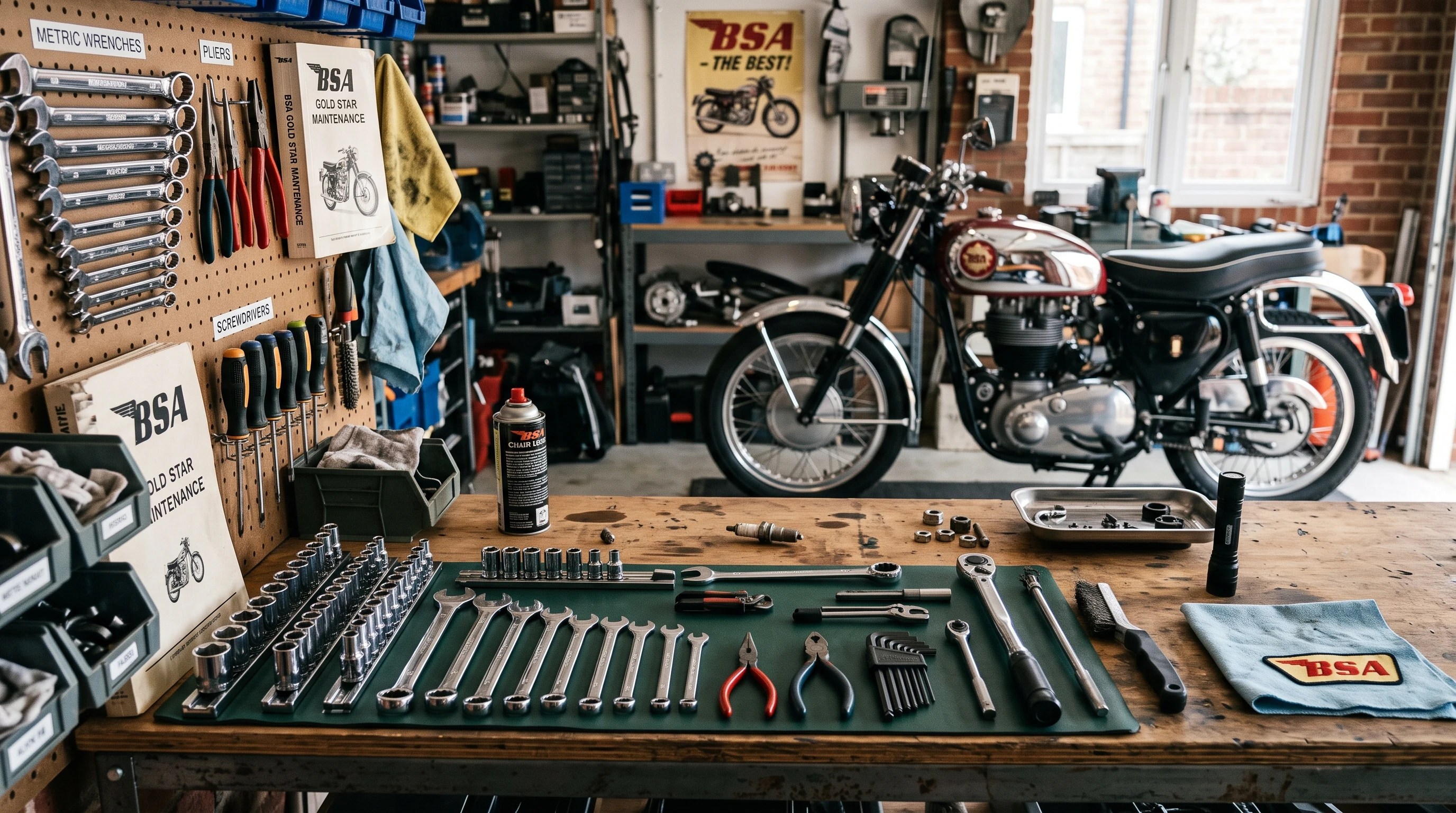
If you plan to do even basic maintenance at home, a good hand tool collection is hard to beat. These are my most-used hand tools for DIY motorcycle work:
- Socket Set: A metric socket and Standard set with a ratchet and extension bars covers almost every nut and bolt on your bike. I look for sets with at least 8mm to 19mm and 1/4″ to 3/4″ sockets to cover most tasks.
- Open and Box end Wrenches: Some spots are too tight for a ratchet, so a set of combination wrenches helps reach tricky bolts. Metric sizes are the go to for most bikes.
- Screwdriver Set: Different sizes of Phillips and flathead screwdrivers are super helpful for things like bodywork, panels, and hose clamps. Magnetic tips are a bonus.
- Torque Wrench: Essential when you want to avoid overtightening important bolts like those on the wheels or engine covers. It helps you hit the right spec, every time, and avoids costly mistakes.
- Pliers Set: Needle nose, slip joint, and locking pliers all have their uses, from pulling cotter pins to removing stuck parts.
- Allen (Hex) and Torx Wrenches: A surprising number of bolts on modern bikes use these heads, and some manufacturers love Torx bolts for their strength and durability.
With these tools, you can take care of routine jobs like oil changes, brake servicing, and chain adjustments. For anyone just starting out, this is a great foundation. As you add to your toolkit, your DIY confidence grows alongside your skills, making each project less intimidating. You don’t have to buy the most expensive tools. Mid-range tools will do the job. You can purchase most major brand tools through Amazon.com, or your local hardware store.
Essential Garage Equipment for Motorcycle Tasks
Once you’re comfy with hand tools, stepping up to some garage equipment is the next move. There’s no need to buy it all at once. Some basic pieces make even big jobs possible at home:
- Motorcycle Stand: Whether it’s a paddock stand or a center lift, it lets you safely raise your bike off the ground for chain work, tire changes, or cleaning. A rear paddock stand often fits most swingarm bikes and is perfect for stability during maintenance. *If you can afford a good center lift stand and have room to store it, this will make almost every project much easier and safer.
- Oil Catch Pan: Mess free oil changes start with a decent oil pan. There are compact ones made just for motorcycles and they’re easy to store.
- Shop Rags and Cleaning Brushes: Dirty hands and greasy parts go with the territory. I always have a pile of rags and a few stiff brushes for scrubbing chain gunk, brake dust, and hard-to-reach corners.
- Battery Charger/Tender: If your bike sits in the garage during the offseason, a smart charger keeps the battery topped up and ready for the next ride, preventing unwanted surprises.
- Tire Pressure Gauge and Pump: Checking and adjusting air pressure only takes a minute but makes a big difference for ride quality and tire life, especially in temperature swings.
- Parts Storage Trays or Magnetic Bowls: I’ve lost more screws to the workshop floor than I can count, so having magnetic bowls really saves the day during teardown projects, keeping small parts handy and secure.
Bigger garage upgrades, like a dedicated workbench or air compressor, are awesome if you have the space. However, the basics above cover most common home jobs. Investing gradually means you get what you need as your maintenance interests expand.
Specialty & Maintenance Tools for the Experienced Wrencher
Some projects just aren’t possible without the right specialty tools. As you take your skills up a notch, you’ll run into jobs that need something more specific than basic hand tools. Here are a few that have made complicated work much less stressful for me, and might do the same for you:
- Chain Breaker and Riveting Tool: This tool set lets you remove and install chains safely. It’s worth having if you ever need to replace a drive chain, especially on bikes with rivet style master links; buying a decent set lasts for years.
- Valve Adjustment Tools: Most bikes need valve checks eventually, and getting the right feeler gauges, magnet pickup tools, and adjustment tools makes the process way less intimidating. Taking on this task saves lots of money over shop labor costs.
- Carburetor Synchronizer: For anyone with a multi carb bike, this tool balances fuel delivery and makes the engine run much smoother. You won’t regret adding this to your garage if you own an older model that needs regular tuning.
- Brake Bleeder Kit: Changing brake fluid is straightforward with a manual or vacuum bleeder, and it’s a good way to keep your brakes crisp and safe after every fluid swap.
- Compression Tester: Diagnosing engine problems? A compression tester lets you quickly check for piston or valve issues without major disassembly, providing big insight before you dig any deeper.
- Spark Plug Socket: This is designed for motorcycle plugs, which are often down narrow holes. Having one with a rubber insert helps protect those plugs from damage as you remove or install them.
Not everyone needs every specialty tool right away. If you’re not comfortable doing in-depth repairs yet, having a trusted local mechanic is always a reliable option, and you can learn a lot by watching what tools they use. Still, collecting a few of these over time lets you take on more challenging jobs as you gain experience.
Tips on Choosing, Storing, and Caring for Motorcycle Tools
Picking up quality tools isn’t about buying the most expensive brands. I’ve found midrange tools work just fine for home mechanics, leaving more budget for riding gear or actual motorcycle parts. Always check real-world reviews, see what mechanics use at bike nights, and pick tools that feel solid in your hands.
Organization also makes life easier. A small toolbox, rollup pouch, or wall mounted pegboard keeps everything visible and easy to grab. Plus, it reduces the chances you’ll lose a bolt or wrench mid job and saves time when you’re in the zone.
Cleaning tools after use, wiping away grease, and occasionally checking for rust or damage extends their lifespan. Spraying tools with a bit of light oil helps prevent rust, especially in damp garages or sheds. Also, storing tools in a dry area goes a long way toward preserving handles and ensuring nothing seizes up from neglect.
Real-World Scenarios & Practical Tool Kit Examples
All the gear in the world doesn’t matter if you never use it, so here’s a quick look at how these tools help in day-to-day maintenance.
- On-the-Road Repairs: I’ve plugged a flat tire miles from the nearest town, tightened a loose mirror, and zip tied a turn signal back on after a bumpy gravel stretch. Small fixes like these keep rides from getting ruined by minor setbacks, turning potential disasters into just another story from the road.
- Home Service Days: Swapping out worn brake pads, changing engine oil, adjusting the chain, and switching to fresh plugs are all jobs you can do with the tools listed above. They’re straightforward but give you confidence and save money on labor costs season after season.
- Advanced Projects: If you’re up for valve checks, carb tuning, or engine diagnostics, those specialty tools from earlier let you keep an older or high-mileage bike running better for longer. Plus, it’s pretty satisfying to know you can take care of your ride top to bottom, no matter what comes up.
Another practical tip: Make a checklist for different types of rides, like weekend trips or longer tours, so your roadside kit always matches the adventure. Being prepared means less stress and more focus on enjoying the open road.
Parting Thoughts
Your motorcycle’s service manual lists the tool sizes for major jobs, and online forums for your bike’s make/model are a huge help. Careful research helps buyers make informed decisions on what fits their riding style and bike type, giving you a road map before you even start shopping.
Equipping yourself with a few basics and picking up specialty tools as your skills grow makes motorcycle maintenance way more straightforward. There’s something rewarding about understanding your bike and knowing you can handle problems yourself, whether on the road or in your own garage. Staying safe, organized, and prepared means you’ll get a lot more fun out of riding every season. If you keep learning and take things step by step, you’ll find your toolkit becomes just as important as your helmet or jacket.
